
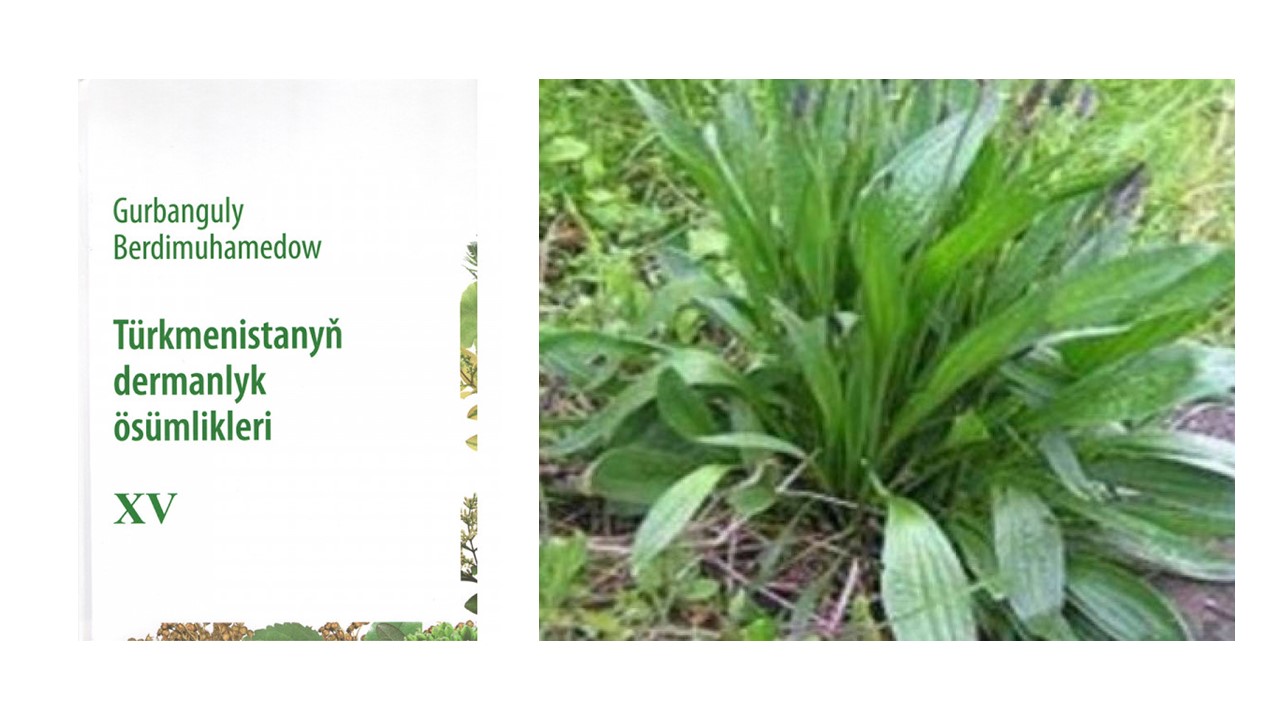
Medicinal Plants of Turkmenistan, Volume XV
In this new era of revival of our sovereign state, thanks to the efforts of our esteemed Comrade National Leader Gurbanguly Berdimuhamedov, great attention is being paid to human health in our country. On the eve of the professional holiday of healthcare workers and the pharmaceutical industry of Turkmenistan, the 15th volume of the fundamental scientific work of our esteemed Comrade National Leader Gurbanguly Berdimuhamedov, academician of the Academy of Sciences of Turkmenistan, Doctor of Medical Sciences, professor, entitled "Medicinal Plants of Turkmenistan." In this regard, our Dear Comrade wrote and presented his people with a 15-volume book entitled "Medicinal Plants of Turkmenistan." The book describes, in alphabetical order, the health benefits of medicinal plants growing on the sacred Turkmen land, when to collect medicinal plants, how to dry them, and also provides scientific data. The book also gives examples from folk songs, legends, proverbs, and sayings about medicinal plants. In September 2009, the first volume of the Honorable President's book Medicinal Plants of Turkmenistan was awarded a diploma "For the depth of thought and high level of scientific research in the encyclopedia" at the XXII International Forum held in Moscow, the capital of the Russian Federation. The book is published in three languages: Turkmen, English, and Russian. The book provides millions of foreign readers with an opportunity to learn about the centuries-old experience and traditions of the Turkmen people, who have made a huge contribution to the achievements of human civilization, including in the field of medicine.
This sacred book has become not only a reference book for specialists and doctors, but has also gained wide recognition in our country and abroad. This publication, which summarizes information about hundreds of medicinal plants growing in Turkmenistan and their healing properties, and also includes recipes for preparing ointments for the treatment of various diseases, is the result of many years of scientific research by our hero Arkadag. Familiarity with this fundamental work allows us to more fully appreciate the riches of nature generously bestowed upon the Turkmen land. The experience of folk healers, accumulated over centuries and passed down from generation to generation, is now in high demand in science. As noted in the book: "The harmonious combination of modern technologies and the principles of medical practice of our ancestors forms the basis for the development of the country's medical industry." This volume plays an important role in the training of young medical personnel and gives impetus to the further development of pharmaceutical science and industry in Turkmenistan, aimed at the production of highly effective medicines from local raw materials. Our ancestors left us a rich and unique heritage of amazing medicinal plants, which nature has gifted us with, which were used to treat the sick, developed on the basis of the experience of famous scientists and doctors, folk healers, passed down from the depths of centuries, leaving us a rich and unique heritage. It is known that such rich experience was formed thanks to the special talent and skill of our people, who were able to master the fertile native land and feel it with their hearts. Our ancestors primarily turned to medicinal plants, which were considered a "natural pharmacy." They used the power of nature to utilize the beneficial substances secreted by trees and herbs. People saw how domestic animals, such as cats and dogs, recovered from illnesses by eating plants. Hunters observed wounded gazelles eating red cumin seeds, known to the local population as a blood thinner. Looking back at the pages of history, our ancestors felt and were able to determine that plants play a role in the harmony between the organic and inorganic worlds. Today, the healing properties and capabilities of many medicinal plants have been scientifically proven in medicine. Despite the fact that chemistry is developing very rapidly and most drugs are prepared chemically, interest in medicinal plants remains strong. Even now, about half of all drugs are made from medicinal plants. Some of them are the only means of treating many diseases. This is, of course, natural, because humans, like any living organism, are inextricably linked to the plant world and are biologically closer to it. Plants accumulate many active substances at a certain stage of their development, and then their medicinal properties reach their peak. When harvesting medicinal plants, it is necessary to take into account the enzymatic processes that occur during the drying of the parts used. The preparation of medicinal products, including ointments and liniments, requires certain knowledge and skills. When prescribing any medicinal plant, a doctor must first and foremost have knowledge in the fields of botany, pharmaceutical chemistry, and pharmacology. Of the approximately 2,000 medicinal plants that grow in Turkmenistan and are used in folk medicine, only more than 100 are approved for use in scientific medicine. In 1999, the National Institute of Medicinal Plants was established in Turkmenistan, which was tasked with conducting an in-depth study of the medicinal plants of our country and preparing medicinal products based on them. Atgulak is a plant found in all regions of Turkmenistan. There are 270 species of this medicinal plant in the world, 10 of which are found in Turkmenistan. The plant is also known locally as "balgush" and "yradert." Atgulak grows in damp areas of plains and mountains, near springs.
The first information about the plant was found in Abu Ali ibn Sina's world-famous book "The Laws of Medicine," which stated that horsetail leaves are useful for stopping bleeding and treating hives. It is believed that the leaves, roots, and seeds of the plant eliminate blockages in the liver, kidneys, and bladder. In Chinese medicine, it is used as a kidney tonic, antipyretic, and for respiratory infections, urinary tract infections, and conjunctivitis. In Tajikistan, it is used for gonorrhea. In Siberia (a compress made with milk) – for kidney diseases and respiratory infections; its powder is inhaled as a quick wound-healing agent. In the Caucasus (pure herb and syrup) – for toothache. Medicinal compresses and juice made from the roots and leaves – for gastritis, colitis, and enterocolitis. In homeopathy, juice and essence made from the herb are used for tachycardia, polyuria, sexual weakness, headaches, and earaches; as a decoction, it can be used for colds and as a wound-healing agent. In Tibetan, Chinese, Mongolian, and Korean medicine, fresh herb, juice, and medicinal essence of field horsetail are used as a wound healing agent, for gastrointestinal diseases, diarrhea, enteritis, pneumonia, bronchial asthma, bronchitis, pleurisy, nephritis, sexual weakness, and nosebleeds. Horsetail juice mixed with honey is used as a diuretic for dysuria in children. Field horsetail leaves are used as a wound healing and hemostatic agent. In Germany, horsetail leaves are brewed and drunk as tea for respiratory tract colds. The ancient Greeks and Romans used field horsetail seeds as a remedy for diarrhea, stomach and intestinal colds. Currently, 27 medicinal plants are listed in the Red Book of Turkmenistan. Taking this opportunity, we, the library staff, sincerely wish our honourable Arkadag, our National Leader, our Hero Serdar Arkadag, that the books he gives us, our people, will be even more fruitful, and his work of national importance will be successful, which will lead to his good health.
Amangozel Gurbanurdydyeva, editor of the Arkadag City Library named after Dovletmammad Azadi